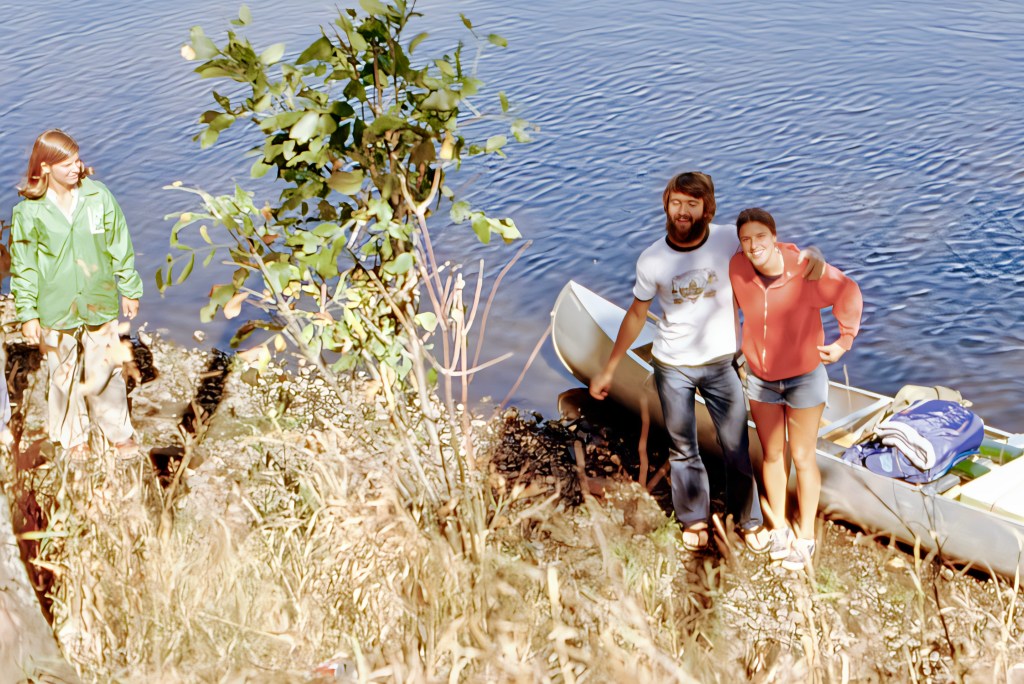
As the summer of 1976 came to an end, my girlfriend Katie L’Heureux and I were preparing for our last year at the University of Wisconsin-Madison. We had been apart that summer, as she worked at Wyonegonic, a girls’ camp in Maine. And I had the good fortune to spend the summer working for Professor Tom Brock, together with Kathy Olson, collecting and testing water samples from Lake Mendota.
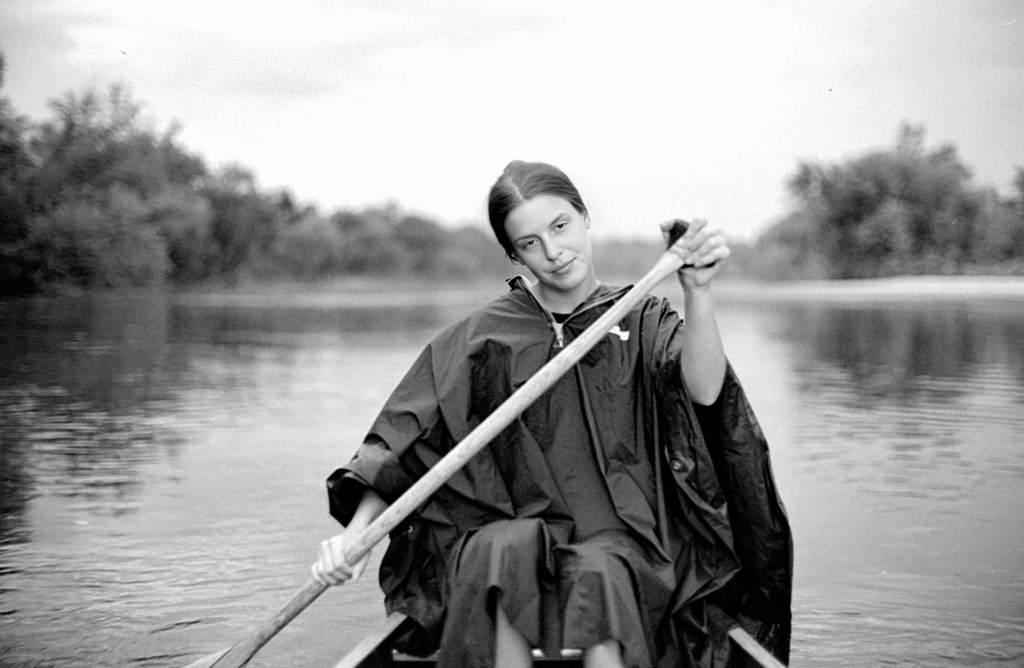
What better way to reconnect than to set off on another marathon paddling adventure? The previous summer, Katie and I had paddled the Wisconsin River, with her parents dropping us off at Wisconsin Dells and my parents picking us up in Wyalusing on the Mississippi River, six days later (see Testing the Water – 1975).
So, I asked my parents if we could borrow their Grumman canoe again. But this time we planned a new adventure, to paddle from Eau Claire to La Crosse. Using my Wisconsin Atlas, I figured that it would be about 120-miles in all, with 60 miles meandering on the Chippewa River and 60 miles on the Mississippi River.
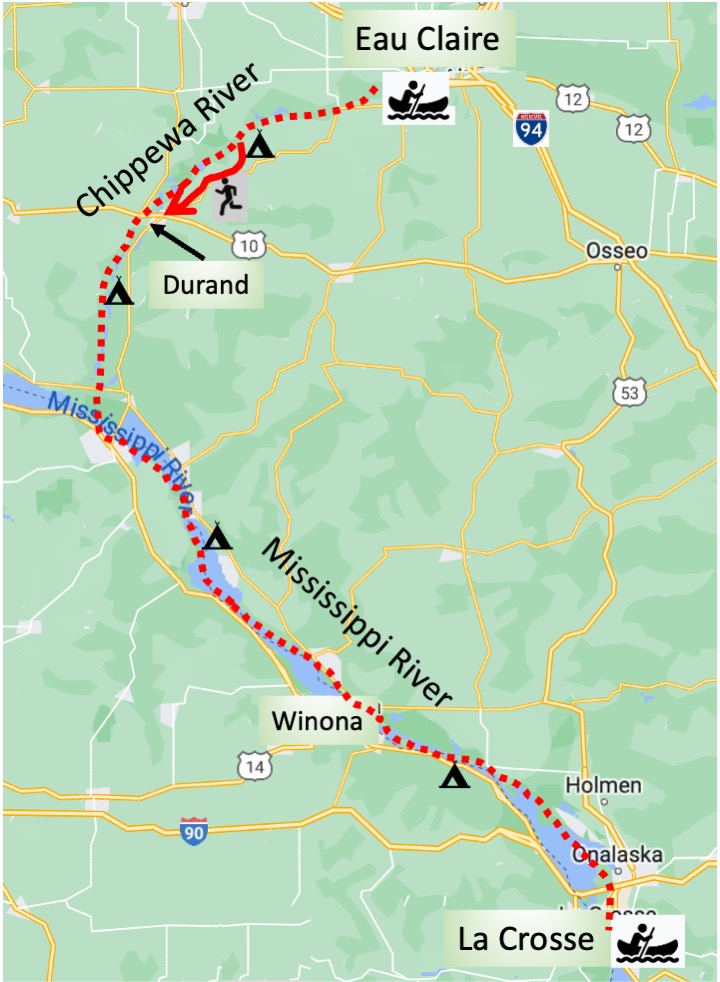
And by luck, my sister Ann and her friends just happened to be driving to Minneapolis for Labor Day Weekend. They agreed to drop us off in Eau Claire and then pick us up precisely 5-days later, at 5 PM sharp in La Crosse on their way home.
Without any way of communicating during these five days, we figured that we would need to paddle about 25 miles (about 8-10 hours) each and every day—with no rest day nor contingency for unforeseen circumstances.
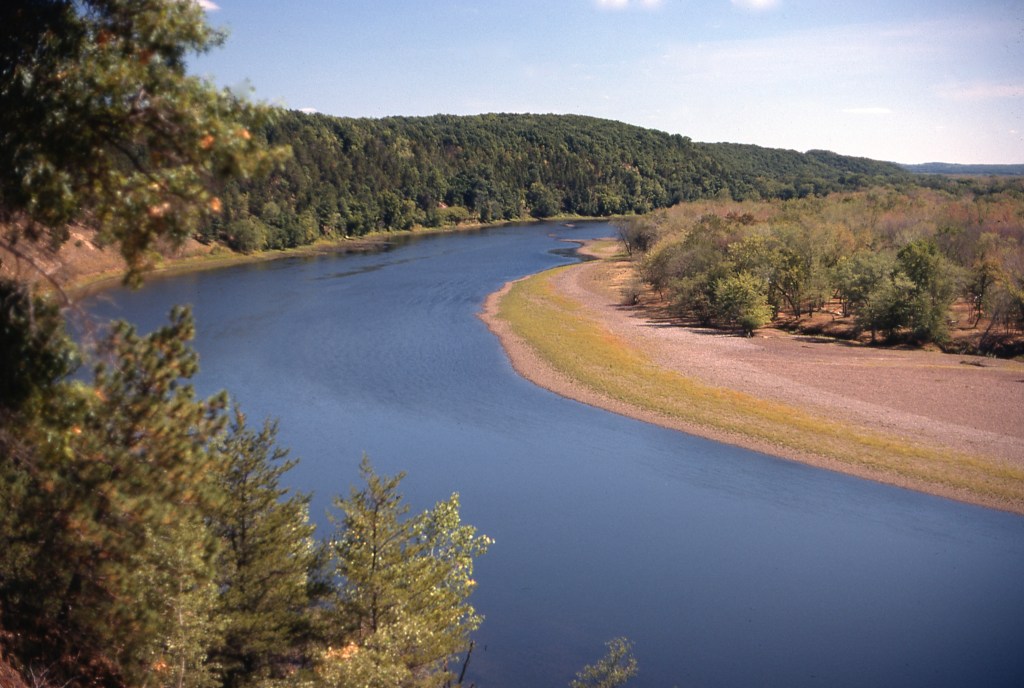
Within minutes of pushing off we were in the wilderness, as we paddled the slow meandering currents of the Chippewa River. The clear blue water cut into the sandy banks creating huge sandy bluffs that rose for hundreds of feet above the river’s edge.
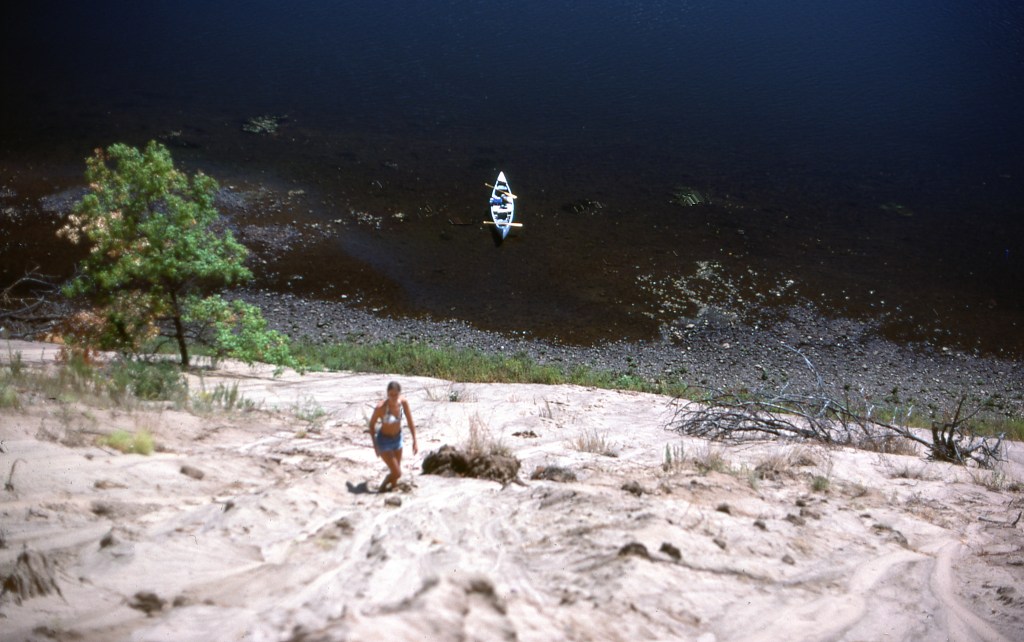
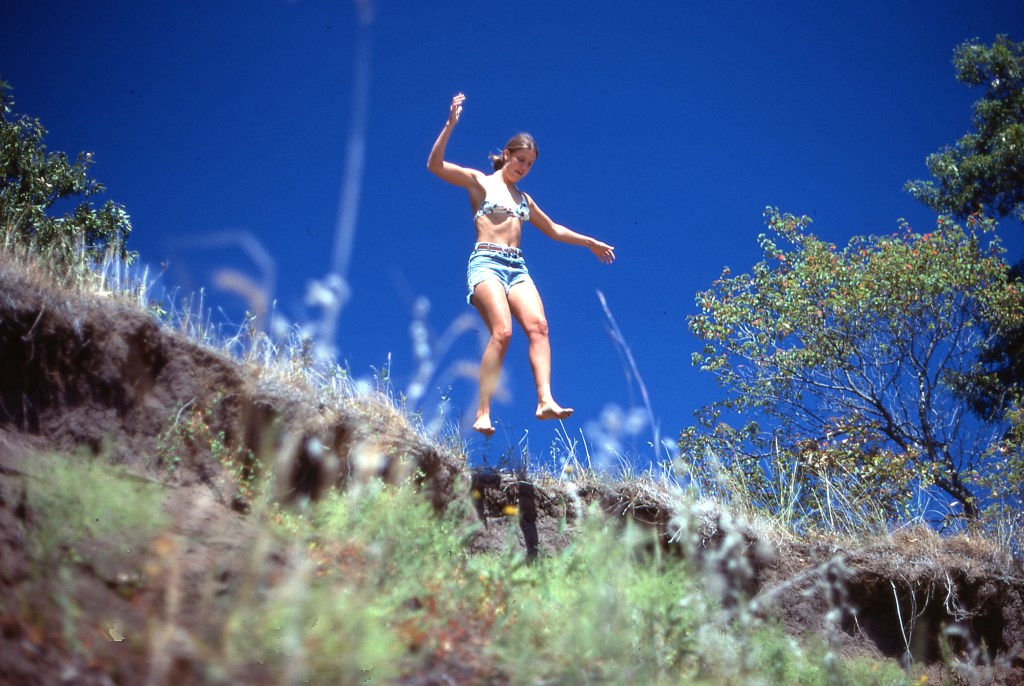
Although we did not see another person, we were surrounded by countless birds, including great blue herons, green herons, osprey, hawks, kingfishers, cedar waxwings, killdeer, and more.
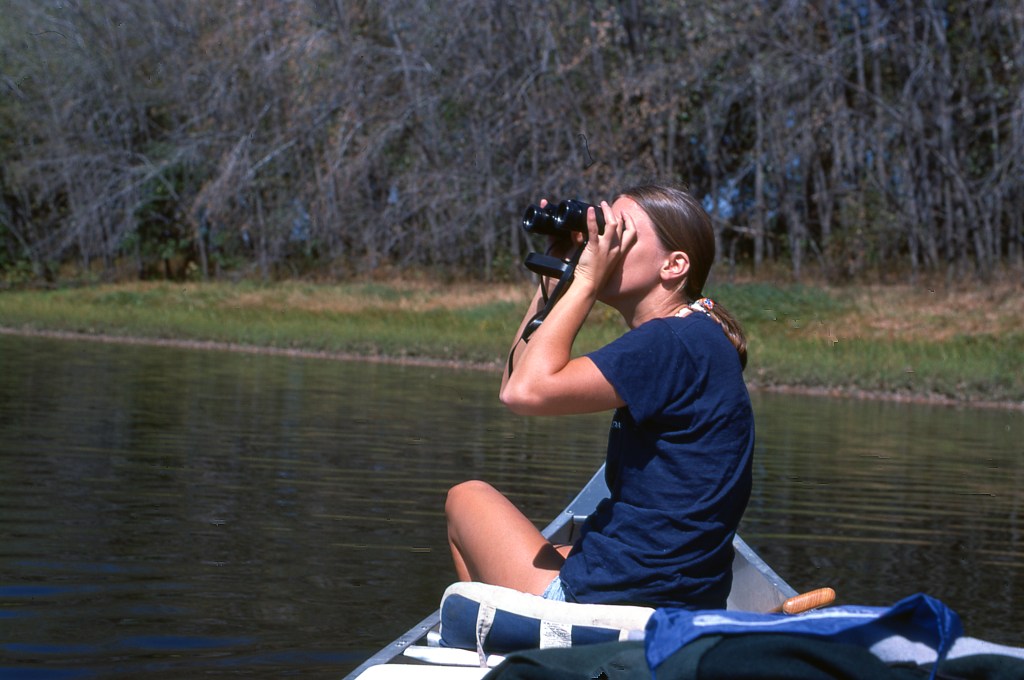
After paddling for about six hours (and about 20 miles), it was getting late in the day so we stopped on the sandy east shore of the river to set up our tent and make dinner. It had been a long day so we went to bed early.
In the middle of the night, I crawled out of the tent to relieve myself and in the moonlight was surprised to see that the river that had been 50 feet from our tent, was now just a few feet away. How did that happen? It hadn’t rained for days. Was there a dam upstream?
But then surprise turned to shock when I realized that our canoe was gone and nowhere in sight.
I ran back to the tent and woke Katie up. I said, “We’re in big trouble! The river level came way up and our canoe floated away. I can’t see it at all.” We checked out the map, thought for a few minutes, and then came up with a plan.
I saw that there were railroad tracks that ran along the east side of the river. I could walk down the tracks to a road and then walk along the highway to Durand—about 10 miles downstream. If I jogged, I could do it in a couple of hours and be there by sunrise—long before the canoe could float past. I would then start walking up the river.
In the meantime, Katie would sleep until first light and then start to walk down the river. If she found the canoe she’d wait until I arrived and we’d paddle back up to get the tent. A foolproof plan to find my parents’ canoe and get back on track to meet my sister in La Crosse in four days.
It was quiet and dark as I ran and walked along the railroad tracks and then roads. I would have tried to hitchhike but a car never came by. Just as the sun was rising, I arrived in Durand, a small town of about 2,000 people on the banks of the Chippewa River.
I came across a small café that had just opened, so I decided to have a quick cup of coffee. Fortunately the sheriff was there too, so I told him about my predicament and plan. He said, “There’s no way that you’re going to be able to walk up the river for 10 miles. But I know a guy who has an airboat. I can call him and he might be able to take you back up the river.”
What luck! The only problem was that it was too early to call him, so we needed to kill some time. Fortunately, I’d brought some money so I was able to sit down and have a great breakfast, all while worrying how Katie was doing.
But those thoughts vanished as the sheriff said he’d reached the owner, who agreed to take me up the river for $15. We walked down to the river’s edge, where I saw the airboat with a large airplane jet engine in the back and a tall seat in the front for me to sit in. As I climbed in the engine started with a roar and we set off heading up the river.
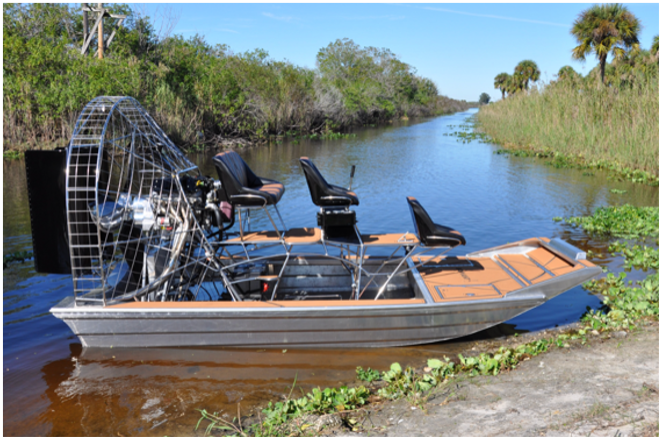
The ride was surreal, as it felt like we were flying along the surface of the water. I started to shiver from the excitement and the damp cool morning mist. As we raced up the river, we’d see a shiny object at the river’s edge, so he would swing the boat in for a closer look. Each time we saw that it was not our canoe, but something else like a fishing boat or pier.
Then as we came around a big turn in the river we saw a canoe in the distance. As we came closer, we could see the silhouette of someone sitting in the canoe—and then I saw that it was Katie, smiling as we approached!
He pulled the boat up to the river’s edge and I hopped out to meet Katie. The boat owner asked if we needed any more help and I said that we were all set and thanked him. Off he sped back down the river and as the sound of the jet engine faded we sat down to figure out what to do next.
It was then that Katie described what had happened with her. At first light, she started to walk down the river’s edge. After only walking about a mile she saw the canoe on the other side of the river. She thought that she’d swim across, get the canoe, and then paddle back upstream to load up the canoe and paddle downstream to meet me.
But as she waded into the deep water and the current got stronger, she thought twice about her plan.
She then saw a railroad bridge that was about a mile downstream and decided to play it safe by walking to the bridge and then up the west side of the river. However, after crossing the bridge she encountered cut-grass on the other shore that sliced and bloodied her bare legs as she walked.
Not to be discouraged, she kept going and got to the canoe. She hopped in and tried to paddle upstream but the current was swift and she could not make any progress. So, she paddled back across the river to the east side and decided to wait for me to arrive.
It seemed like hours passed. Then she heard a jet engine that got progressively louder, until she saw the boat come around the corner with me sitting in the front seat with a big smile.
As the sound of the airboat faded, we realized that we were behind schedule, and still had to paddle upstream to get our gear. With both of us paddling, it took over an hour to make it the mile or so back to our tent. We broke camp, loaded up the canoe, and started downstream on a beautiful warm and sunny afternoon.
And then the second challenge of the trip showed up. A brisk headwind at 15-20 miles per hour slowed our progress almost to a standstill. We’d already lost a half-day of paddling and this was not going to help us get back on track. That day we managed to paddle only about 15 miles in 7 hours of hard paddling—falling further behind our schedule to make it to La Crosse in time. We camped on a sandbar about three miles downstream from Durand. We were exhausted.
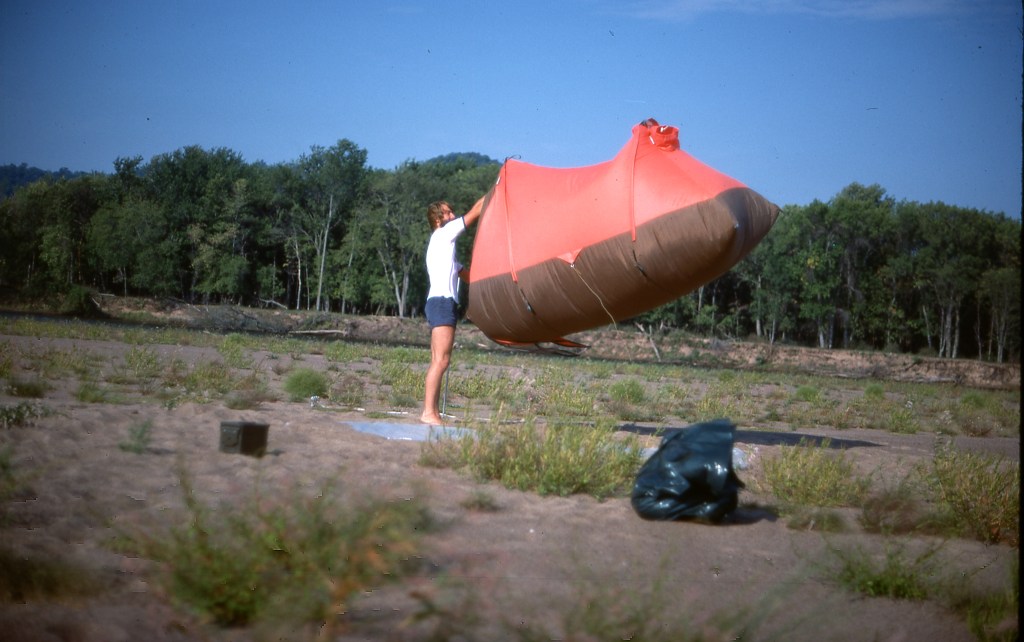
On the third day, we continued down the Chippewa River heading toward the confluence with the Mississippi. We saw many birds and wildlife that day, but unfortunately the westerly winds continued most of this day, slowing our progress and making it unlikely that we would get back on schedule on that day.
But then our fortunes turned and suddenly the winds shifted to the north, just as we got to the Mississippi. Heading south, we now had a brisk tailwind. Katie held up a towel in the front of the canoe and it became a sail that sped us across the lake.
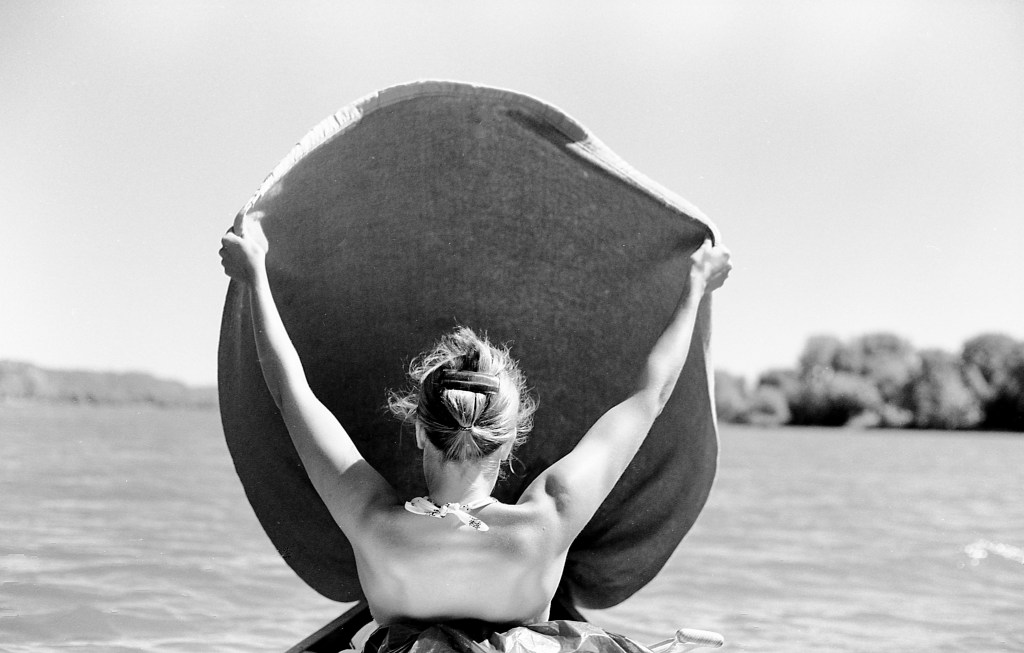
We made it to the Army Corps of Engineering locks by 6 PM and camped in a slough just downstream from Alma. Our little canoe was dwarfed by the size of the locks that normally held giant barges carrying cargo to and from the Gulf of Mexico.
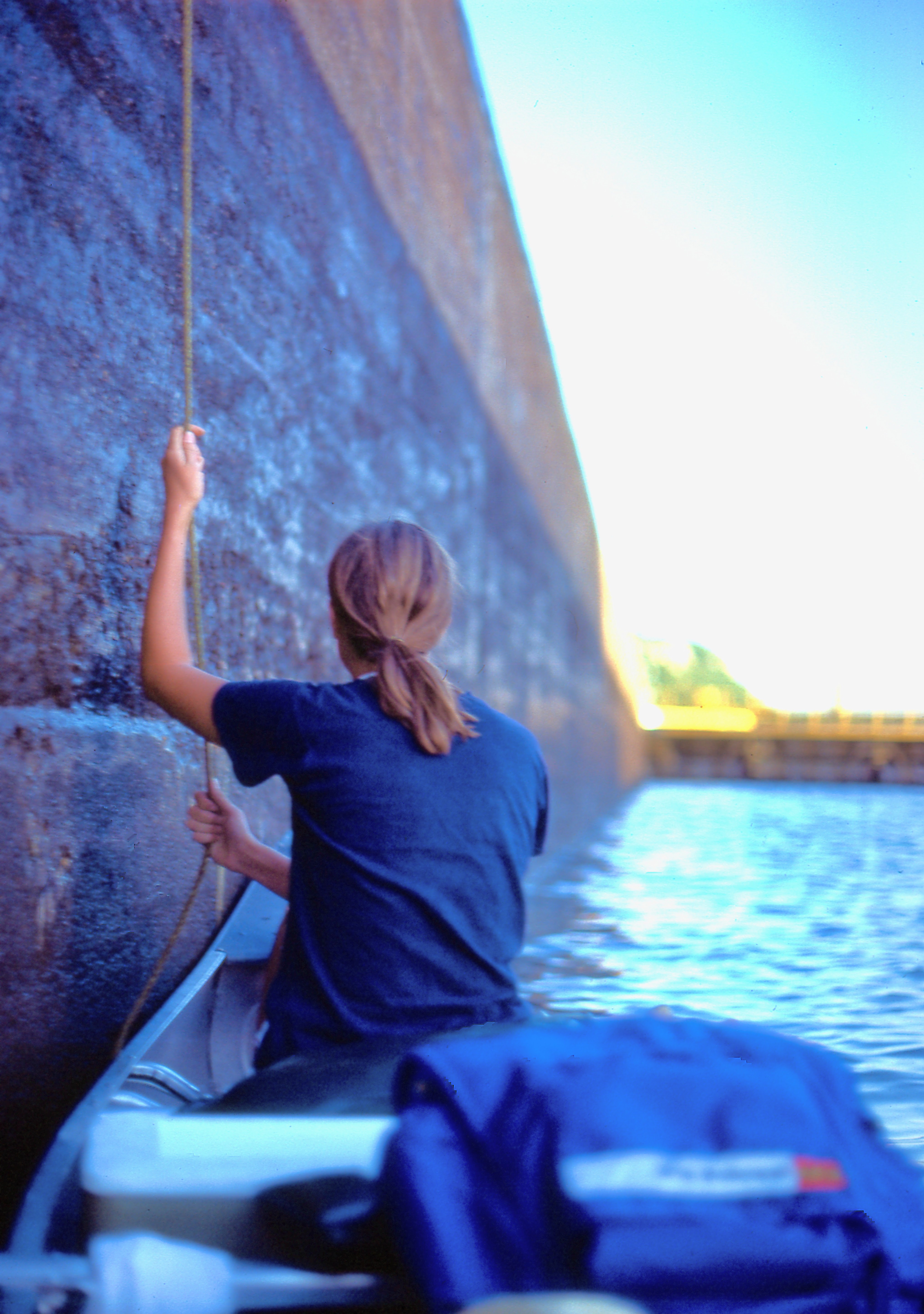
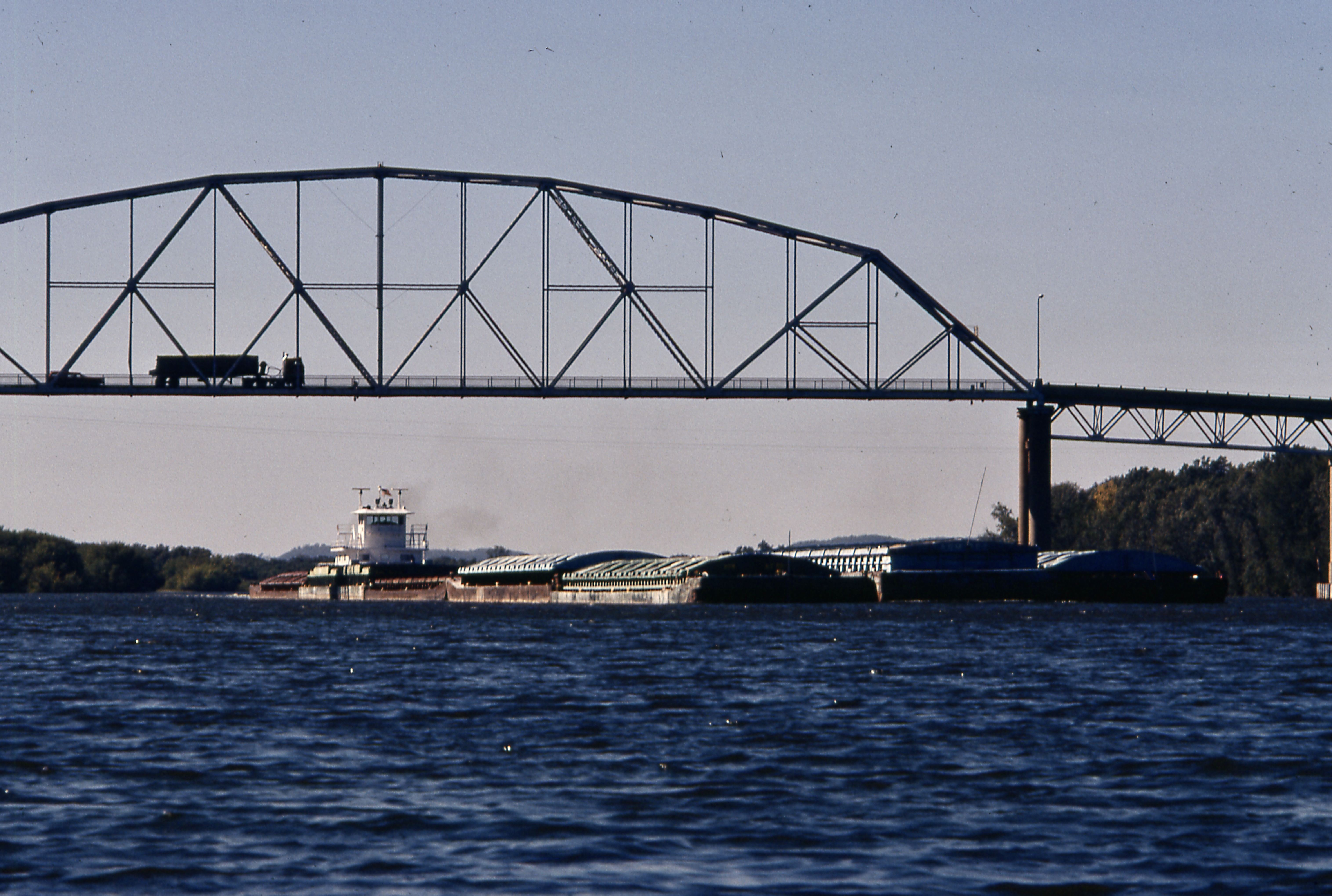
We managed to travel 28 miles in eight hours of paddling that day, but we were still behind our schedule to make it to La Crosse in time.
The next day was Saturday, our 4th day on the river. We figured that to make it to La Crosse as planned; we needed to paddle more than 30 miles that day. This would be tough, since the Mississippi is wide and the current is barely noticeable.
As we came to a big lake in the river formed by the next lock and dam, the wind was still at our back and we were able to surf on the waves. We were surprised as out of nowhere a large water snake tried to climb up my paddle to get into our canoe.
As nightfall arrived, we tried to find a place to camp on the east side of the river, without luck. We couldn’t see well, but as we probed the shoreline we realized that it was a marsh without any dry land.
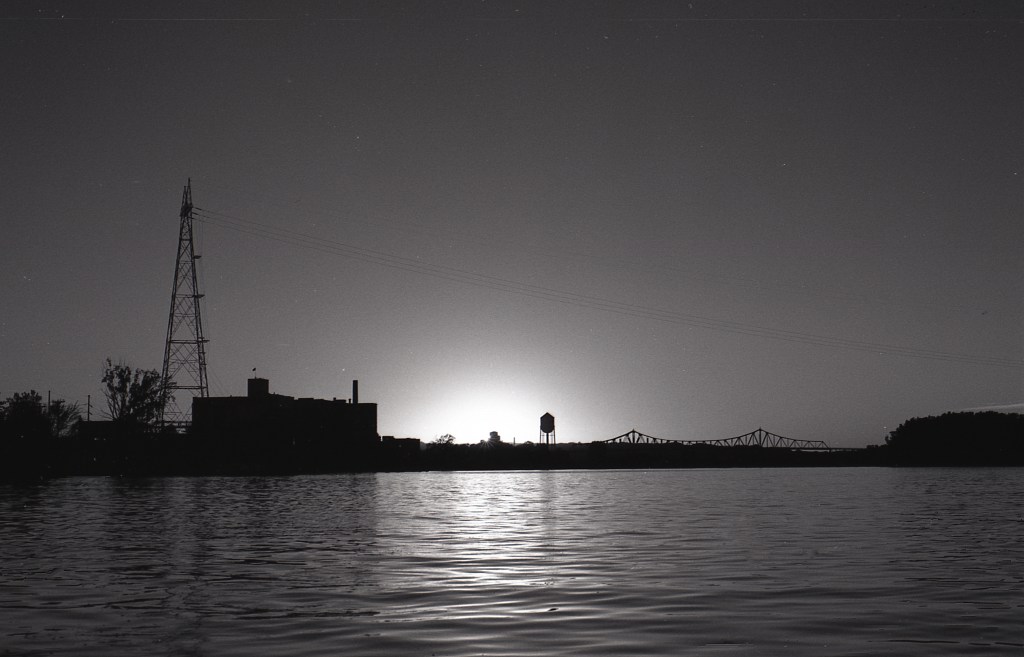
As it became pitch dark, we startled a giant fish that slammed into our boat almost tipping us over. We decided to paddle on in the dark of night to find a better place to camp.
By 10 PM—in the pitch dark and after paddling non-stop for more than 12 hours—we found a small island that had a firm surface.
We crawled out of our canoe totally exhausted and set up our tent. As we started to fall asleep, we heard what sounded like tiny footsteps slowly approaching our tent. As the creature got closer, we could hear it breathing!
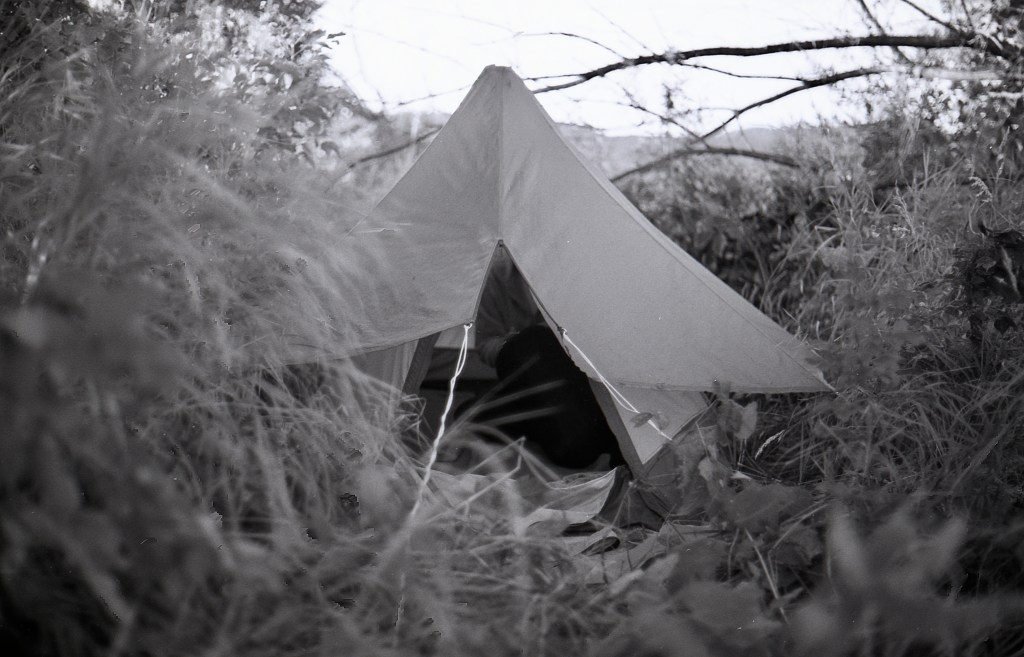
Normally, we might have gotten up to check it out, but we were so exhausted that we drifted off to sleep—until we heard a loud “clapping” sound on the water. Bleary-eyed, we peered out the front of the tent and saw something swimming just off the island, back and forth, and then diving and slapping the water with its big tail. It was a beaver, unhappy that we were sleeping on its house.
Figuring that a beaver couldn’t harm us, we fell back to sleep with the sounds of beavers walking around our tent and slapping the water.
And then, sometime during the middle of the night, we were awakened again by what felt like a thunderous earthquake that shook us in our tent! We sat up and held each other tightly, just as a freight train roared past us, no more than a few feet away.
We got an early start on Sunday morning, much to the relief of the beavers who continued their vigil all night long. We had paddled 33 miles on Saturday, so we only had about 20 miles to go. We made good time, paddling this last stretch in about seven hours, despite a slight headwind.
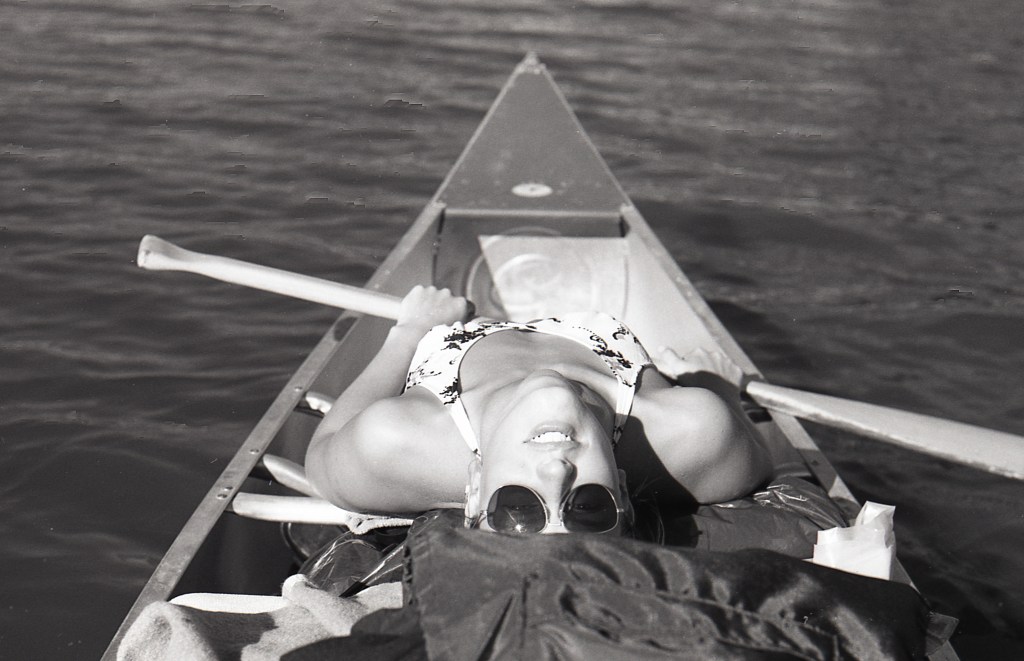
We made it to the rendezvous spot in La Crosse at the Highway 14 bridge by 4 PM – an hour earlier than scheduled. And after a short delay finding the right “bridge over the Mississippi,” my sister showed up to take us back to Madison.
My last entry in my log for that trip said that we were “moderately exhausted.” In retrospect, it’s hard to imagine why we would have planned such a long trip, on rivers that we’d never been on. We did learn valuable lessons about how to respond to challenges with teamwork and determination.
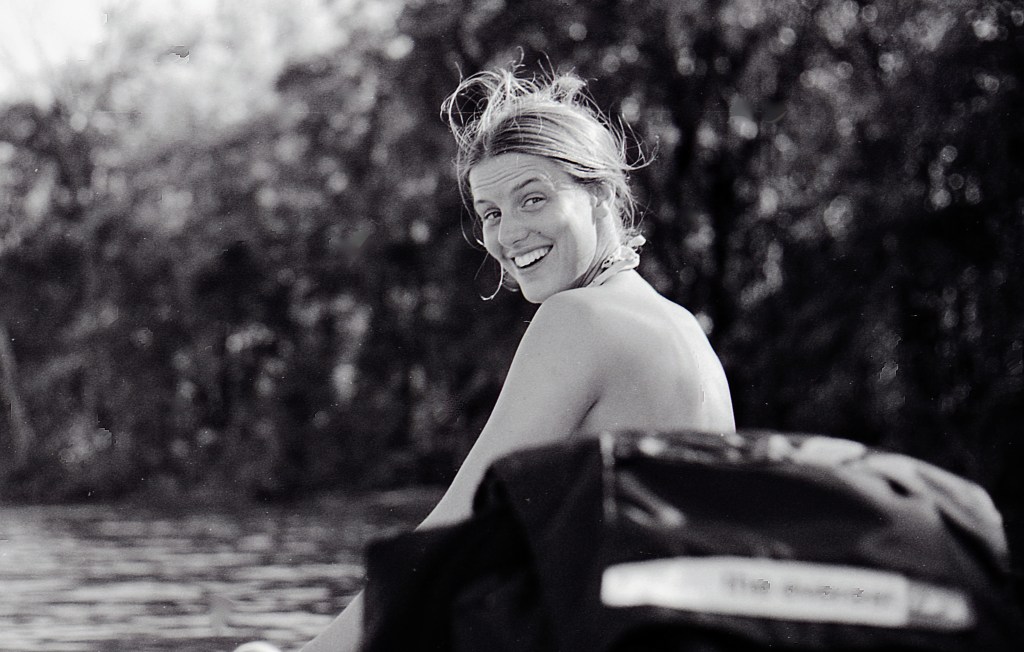
But most importantly, we learned that if we could end this trip still smiling it might bode well for the future, spending the rest of our lives together.
Postscript
It was years later that I learned why the water level may have gone up during that night on this trip. There is a dam just upstream from where we camped, and during warm nights, dams often release water to generate more electricity to meet the additional power demands.
Finally, I just proposed to my wife Kate (the former Katie L’Heureux) that we repeat our adventure from 50 years ago this upcoming Labor Day Weekend. She politely declined, but she said that I was welcome to go on my own. Any takers (assuming that we’ll pitch the tent on higher ground and tie the canoe to it)?




Leave a Reply